Offer and access
Checkout, subscriptions, cohorts, gated content, accounts, and customer onboarding.
Creator platforms
For established creators, educators, and expert-led communities, Particular Systems builds the platform where the offer, payment, content, progress, support, and customer relationship live under one brand.
Why own it
A creator business often starts with rented distribution, course tools, payment links, community spaces, spreadsheets, and support workarounds. That can work early. It starts breaking when the offer gets more specific, the audience grows, or the experience needs to feel premium.
An owned platform lets the product match the method: onboarding, learning, assessments, content generation, practice, progress, subscriptions, and support can be designed as one customer journey.
What we build
Checkout, subscriptions, cohorts, gated content, accounts, and customer onboarding.
Courses, lessons, assignments, practice, tests, analytics, and personalized next steps.
Admin tools, support flows, customer data, content management, reporting, and retention loops.
The build can include AI where it improves the product: research help, content generation, personalized coaching, assessments, recommendations, customer support, or internal administration.
Proof
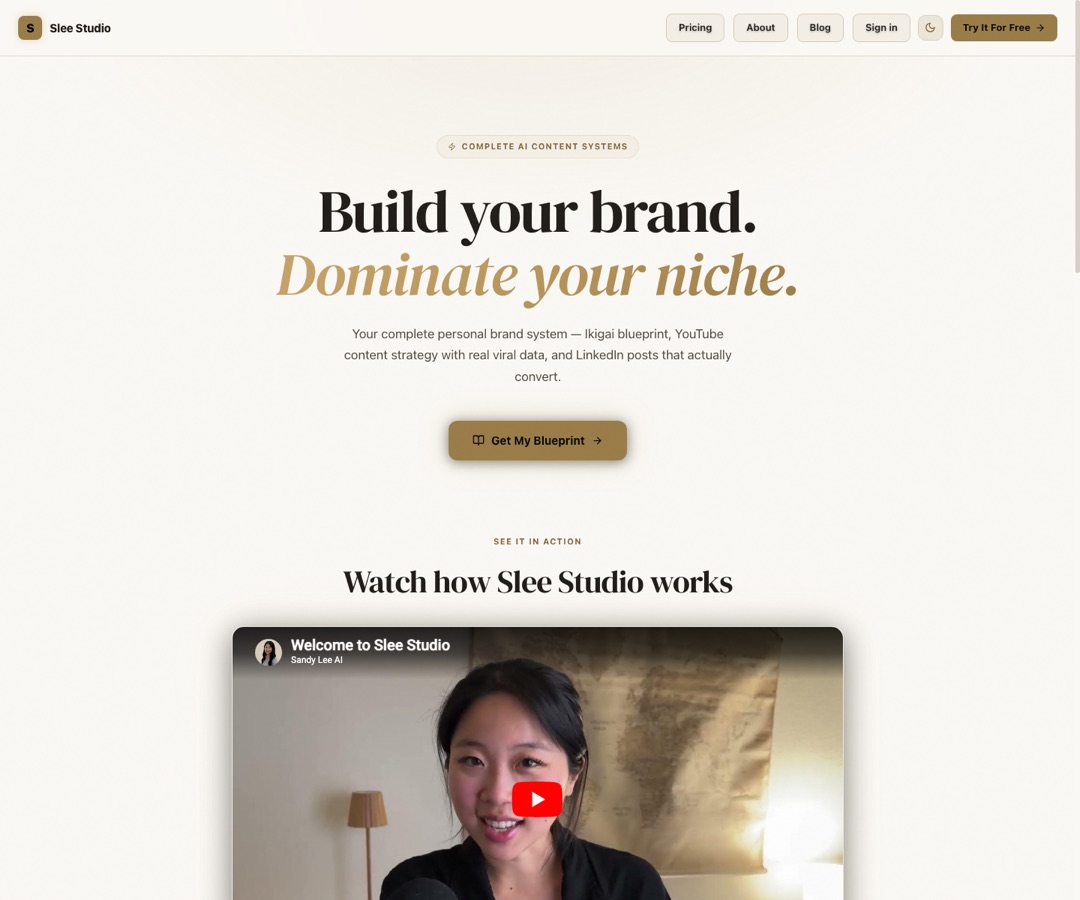
Slee Studio turns Sandy Lee's content strategy into a self-serve software product for creators and founders. CoachifyLive brings its CAT-preparation audience into one branded student platform.
Next step
Useful starting context: audience size, current offer, paid products, content or curriculum, operational pain, and what would make the experience feel more owned and defensible.
Discuss a creator platform